1863: The Draft Riots and a Newsroom Under Siege
Our correspondent traces how a local question became a citywide one.
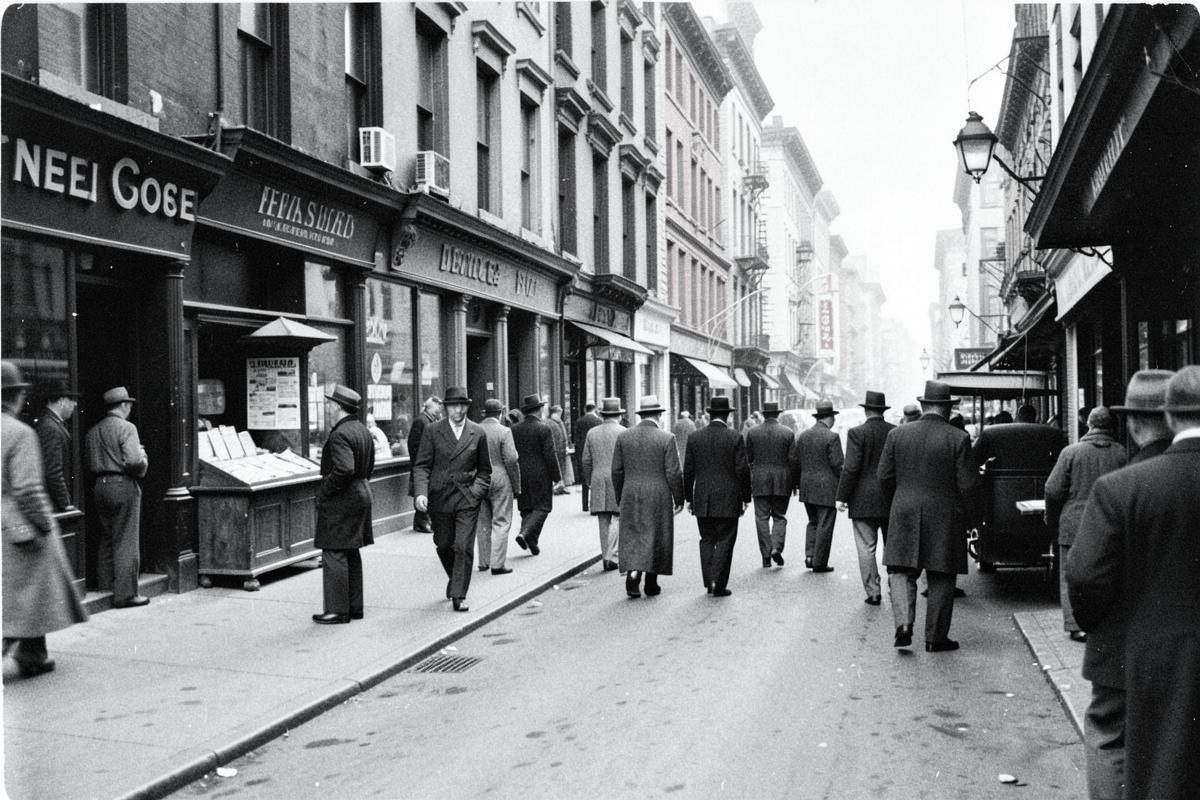
For most of the past decade, 1863: The Draft Riots and a Newsroom Under Siege was a matter for specialists. That is no longer true. Records reviewed by The New York American, together with interviews across New York City, describe a shift that residents can already feel in their daily routines.
Read at a century's distance, the language is startling in places — confident where later evidence demanded doubt, silent where it should have spoken. We reprint it because a newspaper's errors are part of the record it keeps.
Our reporting will continue. We are publishing the underlying figures alongside this article and will update it as the relevant bodies act. Readers with documents, records or firsthand experience of waterfront trades are invited to write to the newsroom.
The financial picture is the constraint that governs the rest. Capital budgets are committed years in advance, and each revision moves obligations rather than removing them. Analysts who follow waterfront trades note that the cost of waiting is now legible in the documents themselves, expressed as escalation rather than as policy.
The historical record is instructive. New York has confronted a version of this question before — in the 1970s, again in the early 2000s — and the resolutions that lasted were the ones that survived a change of administration. Institutional durability, more than any single plan, has been the city's reliable predictor of results.
The immediate facts are not in dispute. Over the past eighteen months the relevant agencies have collected more data, published more of it, and drawn conclusions that broadly agree on direction if not on magnitude. Where the assessments part company is on cause: whether what New York City is seeing reflects a durable structural change or a slower recovery from an unusual few years.
It would be a mistake to read the trend as uniform. Within a single borough the numbers diverge sharply block to block, and the averages conceal the places where conditions have improved markedly alongside those where they have not improved at all. Any honest account of 1863: The Draft Riots and a Newsroom Under Siege has to hold both.
What happens next depends on a handful of decisions expected within the year. Each is procedural on its face and consequential in effect: a schedule adopted, a formula revised, a threshold set. Those who follow waterfront trades closely will be watching the footnotes.
Officials involved in waterfront trades describe a process constrained less by ambition than by sequencing. Approvals arrive in one order, financing in another, and construction in a third. The result is a timeline that looks like delay from the sidewalk and like caution from the conference room.
There is also a labor story here. The workforce that carries out waterfront trades is older than it was a decade ago, and the training pipelines that once fed it were narrowed during leaner years. Rebuilding that capacity is slow work with few ribbon-cuttings, which is precisely why it tends to be deferred.
For readers who want a single measure to follow, the most useful one is not the headline figure but the interval between commitment and completion. When that interval narrows, conditions on the ground tend to follow within a season or two. When it widens, the announcements keep coming and little else changes.
What the archive preserves best is texture: the price of bread, the hour the ferries ran, the names of the streets before they were renamed. These details outlive the arguments that once filled the front page.