1851: The First Edition and the City It Described
Our correspondent traces how a local question became a citywide one.
The documents are dry; the stakes are not. 1851: The First Edition and the City It Described now sits at the intersection of money, geography and patience — three things New York has never had in equal supply.
The account below is drawn from our bound volumes, with contemporary spelling and usage preserved. Where our predecessors' reporting has since been corrected by the historical record, we say so plainly rather than quietly.
It would be a mistake to read the trend as uniform. Within a single borough the numbers diverge sharply block to block, and the averages conceal the places where conditions have improved markedly alongside those where they have not improved at all. Any honest account of 1851: The First Edition and the City It Described has to hold both.
What happens next depends on a handful of decisions expected within the year. Each is procedural on its face and consequential in effect: a schedule adopted, a formula revised, a threshold set. Those who follow linotype rooms closely will be watching the footnotes.
Officials involved in linotype rooms describe a process constrained less by ambition than by sequencing. Approvals arrive in one order, financing in another, and construction in a third. The result is a timeline that looks like delay from the sidewalk and like caution from the conference room.
There is also a labor story here. The workforce that carries out linotype rooms is older than it was a decade ago, and the training pipelines that once fed it were narrowed during leaner years. Rebuilding that capacity is slow work with few ribbon-cuttings, which is precisely why it tends to be deferred.
For readers who want a single measure to follow, the most useful one is not the headline figure but the interval between commitment and completion. When that interval narrows, conditions on the ground tend to follow within a season or two. When it widens, the announcements keep coming and little else changes.
Residents offer a plainer account. In neighborhood meetings across New York City, the same three questions recur: how long, how much, and who decides. Those questions rarely receive complete answers, which is itself part of the story — the administrative machinery was designed for a slower century.
Advocates on both sides of the argument make reasonable points. One holds that the pace of change is already straining institutions that residents depend on. The other holds that the cost of inaction compounds quietly and lands hardest on those least able to absorb it. The evidence supports parts of each position.
None of this resolves the underlying disagreement about priorities, which is properly a political question rather than a technical one. But it narrows the range of honest positions. The facts, as they now stand, rule out both the most alarming and the most reassuring accounts of 1851: The First Edition and the City It Described.
Comparative figures help place New York in context. Cities of similar size have taken different approaches to linotype rooms, with results that resist easy summary. The most successful examples share one unglamorous feature: they measured outcomes continuously and published what they found, including the failures.
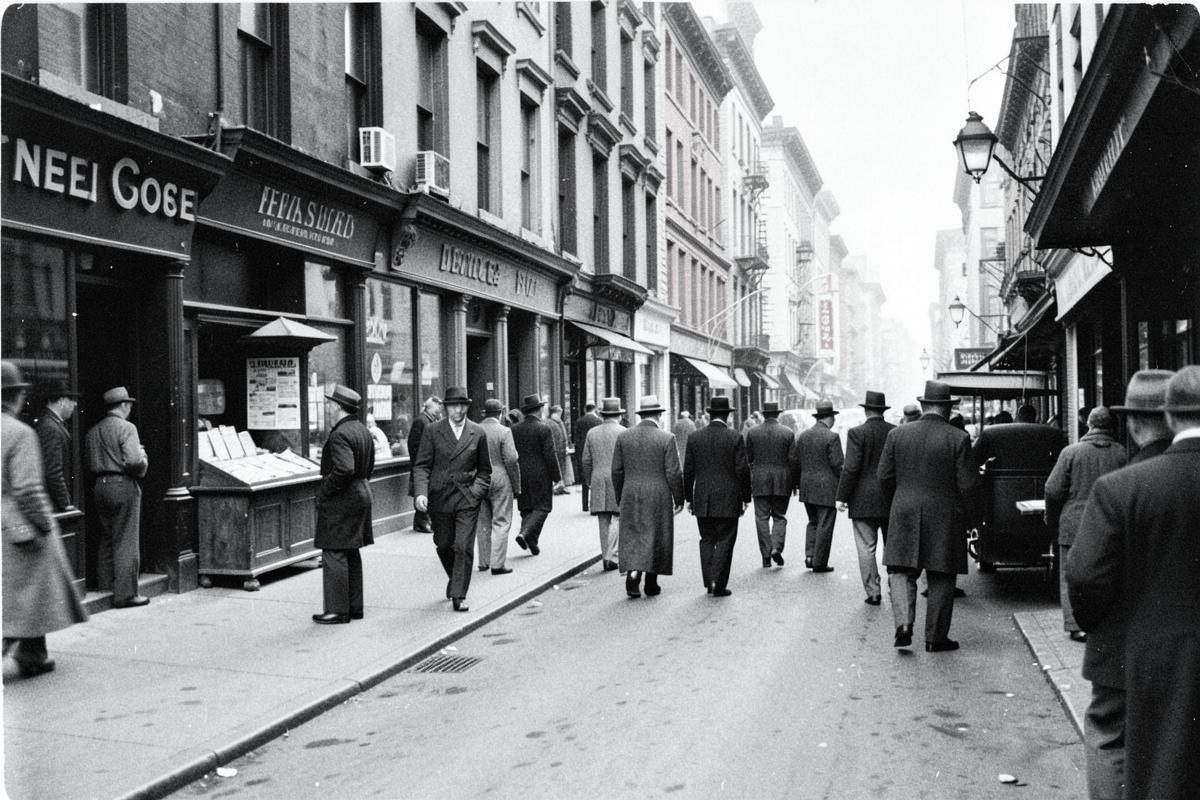
The photographs accompanying the original edition were made on glass plates, and the captions were set by hand in a composing room a few blocks from where the events took place.